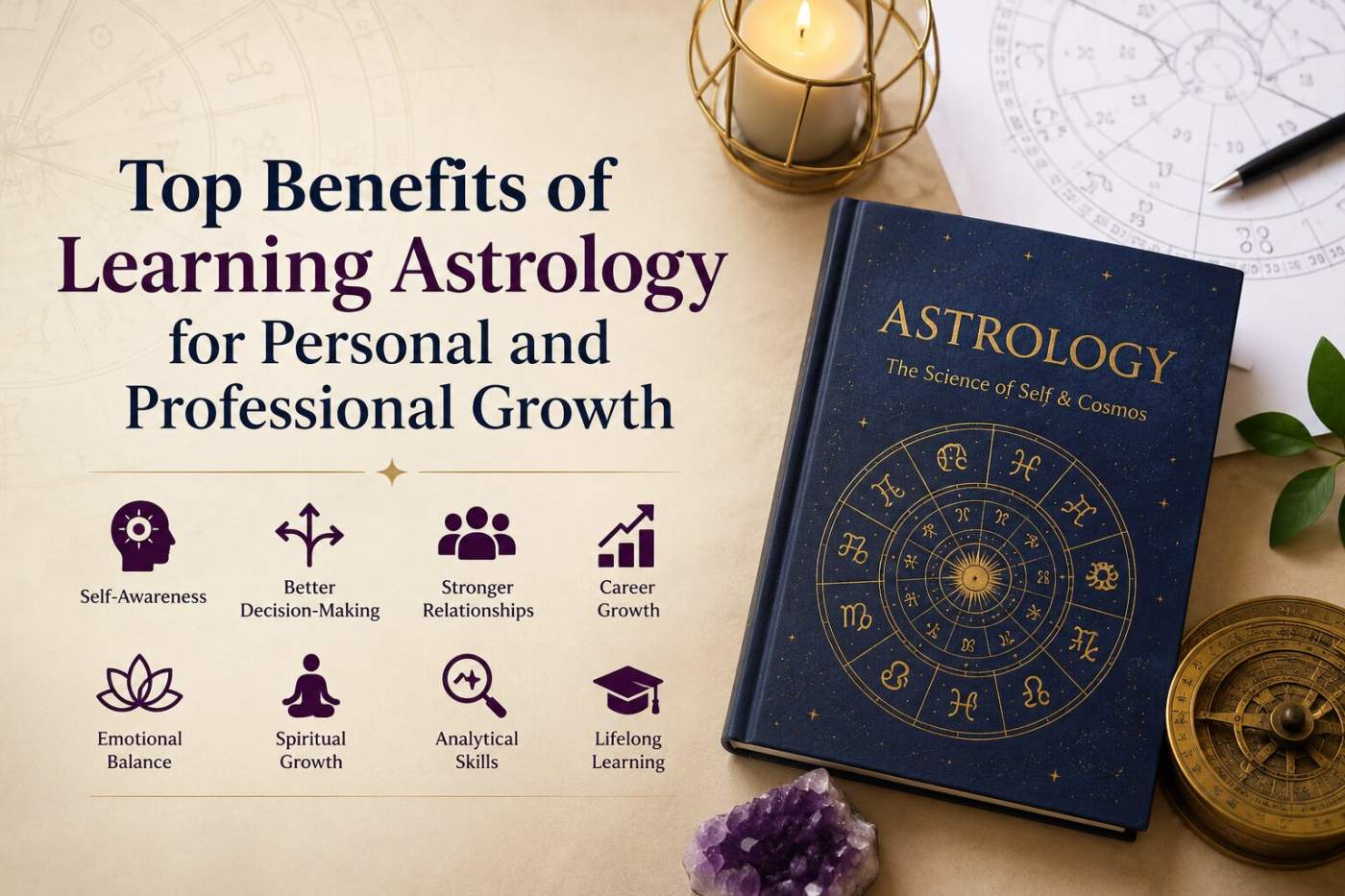

You do not have to believe that the position of Mars literally determines your temperament to find astrology for personal growth genuinely useful. The value of the framework does not depend on its being cosmically true, but rather on whether it helps you notice things about your own character that you might otherwise overlook.
Astrology offers a rich, internally consistent vocabulary for describing personality, motivation, relational patterns, and life themes. The birth chart – a map of the sky at your exact moment of birth – functions as a kind of structured mirror. Whether the mirror is accurate because of celestial mechanics or because the archetypes it uses are psychologically resonant human universals is a question you can hold open while still using the tool. The reflection can be useful regardless of the explanation.
What Astrology Actually Offers Beyond Horoscopes
Sun sign horoscopes – the ‘Scorpio season brings transformation’ columns in magazines – are the lowest-resolution version of astrology. They assign meaning to one twelfth of the world’s population based on a single planetary position. The birth chart is something far more specific: it maps the positions of the Sun, Moon, and all major planets relative to the horizon at your exact location and time of birth, placing each in one of 12 signs and 12 houses.
The resulting combination is genuinely individual. Two people born on the same day in the same city but at different times will have noticeably different charts. The depth of that specificity is part of why serious astrology practitioners consider the generic horoscope a distraction from the actual practice.
The Three Core Placements Explained
| Placement | What It Represents | Growth Question It Raises |
|---|---|---|
| Sun Sign | Core identity, ego, the self you are consciously becoming | Where am I seeking to express myself and be recognised? |
| Moon Sign | Emotional nature, instinctive responses, inner needs | What do I need to feel safe, and is that need being met? |
| Rising Sign (Ascendant) | First impression, approach to the world, the mask and also the door | How do I present myself, and does it align with who I actually am? |
Most people know only their Sun sign. The Moon sign is often more personally recognisable – it describes emotional patterns, what you retreat to under stress, and what you need in relationships. The Rising sign is how others first experience you, which sometimes differs noticeably from your self-perception. The gap between Rising and Moon signs is often where people do the most interesting self-reflection work.
The 12 Houses: A Framework for Life Areas
| House | Life Area | Growth Theme |
|---|---|---|
| 1st House | Identity, appearance, first impressions | How do I show up? How do I want to? |
| 2nd House | Resources, money, values, self-worth | What do I value, and does my life reflect that? |
| 3rd House | Communication, siblings, local environment, learning | How do I communicate? What am I curious about? |
| 4th House | Home, family, roots, private self | Where do I come from, and how does it shape me? |
| 5th House | Creativity, romance, play, self-expression | When do I feel most alive? |
| 6th House | Daily routines, health, service, work habits | How are my daily habits serving or limiting me? |
| 7th House | Partnerships, marriage, open enemies | What do I seek in others? What do I project onto them? |
| 8th House | Transformation, shared resources, depth, shadow | What am I afraid to look at directly? |
| 9th House | Beliefs, travel, philosophy, higher education | What do I believe, and have I examined those beliefs? |
| 10th House | Career, public life, legacy, authority | What am I here to contribute publicly? |
| 11th House | Community, friendships, hopes, collective | Where do I belong? What do I hope for? |
| 12th House | Solitude, hidden self, spirituality, endings | What am I not yet ready to acknowledge about myself? |
Using Your Chart for Personal Growth: A Practical Approach
The most useful application of a birth chart for personal development is not prediction – it is pattern recognition. When you read a detailed interpretation of your chart and something resonates strongly, that resonance is information. It points toward something that feels true about you, even if you did not have language for it before.
A few entry points that tend to generate useful self-reflection:
- Your Moon sign describes your emotional needs. If your Moon is in a sign that needs alone time (Scorpio, Capricorn, Aquarius) and you have been overloading your social calendar, that framework might crystallise something you already sensed.
- The house your Sun occupies shows where you are meant to express your core identity. If your Sun is in the 10th house (public life, career) but you have spent years avoiding visibility, that is a pattern worth examining.
- Challenging aspects (squares, oppositions between planets) in your chart often describe internal tensions you live with. Seeing them named can reduce the sense that you are simply broken and increase the sense that you are navigating a specific tension – which is far more workable.
Journaling Prompts Based on Your Chart
- What does my Moon sign need that I have been dismissing as weakness or indulgence?
- Where is my Rising sign’s mask most different from my Moon sign’s inner needs – and what does that gap cost me?
- What life area (house) is most active in my chart right now, and what questions does it raise?
- Which planet in my chart feels most expressed in my life currently? Which feels most suppressed?
- What would it look like to lean into my Sun sign’s core energy more consciously this year?
The Sceptic’s Case: Why It Works Even If It Isn’t Literally True
Psychologist Carl Jung was genuinely interested in astrology – not as a literal mechanism but as a symbolic language that taps into what he called archetypes: universal patterns of human experience. The astrological symbols (Saturn as discipline and limitation, Venus as desire and connection, Mars as drive and conflict) are not arbitrary. They map onto human motivational and behavioural patterns that appear across cultures.
The Barnum effect – our tendency to accept general personality descriptions as uniquely personal – is a real limitation of astrology’s truth claims. But a thoughtful reading of a full birth chart is not generic. The specificity of house placements, planetary aspects, and sign combinations produces interpretations that are individual enough to be genuinely surprising to the person receiving them. That specificity is where the useful self-reflection lives.
Recommended Resources for Deeper Exploration
- Chart generation: Astro.com (free, gold standard for chart accuracy – input birth date, time, and location)
- Beginner interpretations: Astrology for the Soul by Jan Spiller (North Node focus, psychologically rich)
- Modern approach: The Astrology of You and Me by Gary Goldschneider, or any work by Liz Greene
- Podcast: The Astrology Podcast (Chris Brennan) – the most intellectually rigorous publicly available astrology resource
- App: Co-Star or Time Passages for quick chart reference, though neither replaces a full reading
Astrology is most useful when it is held lightly. Use it as a prompt, a vocabulary, a framework for asking questions about yourself. Release it when it does not fit. The goal is self-knowledge, and astrology is one of many tools that can, in the right hands and the right frame of mind, contribute to it.