
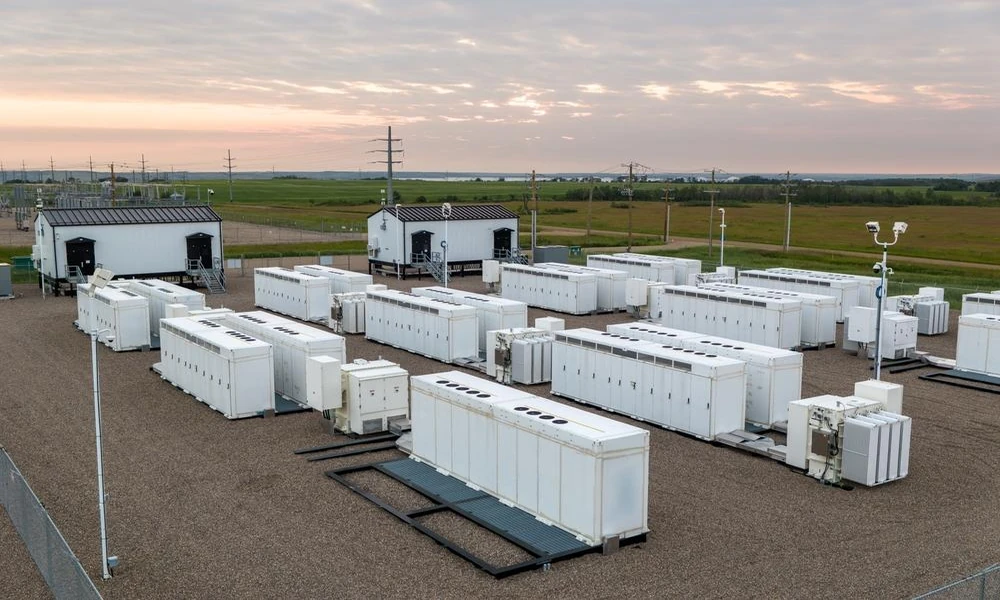

For companies in the energy-intensive industry that operate in locations far away from the grid system, depending only on the traditional fossil fuel generators may be very unsustainable and environmentally irresponsible. The fluctuating market in diesel, logistical challenges, and increasing environmental regulations have put a lot of stress on remote mining projects, industries, and construction. In order to stay competitive, business leaders are exploring sustainable ways of providing non-stop power without emptying their bank accounts..
The strategic integration of modern hybrid power generation architectures provides a commercially validated blueprint forward-seamlessly coupling renewable energy assets with intelligent battery storage and high-efficiency thermal management. In this way, off-grid businesses will be able to drastically reduce long-term operational costs while simultaneously reducing their carbon footprints in the process.
The Economic Advantage: Slashing Operational Expenditures
The core financial argument for decentralized hybrid energy turns on maximum fuel displacement and optimized operational efficiency. The old style infrastructure generally makes use of diesel or natural gas generators that run continually day and night. The problem is that these engines are normally run at a very inefficient load during times when there is low demand for power.
A multi-technology hybrid framework fundamentally transforms this operational dynamic:
- Fuel Savings: In-house PV arrays and wind turbine systems produce economical and emission-free power in peak production periods, thus allowing main generators to switch off or run idle.
- Peak Shaving & Load Leveling: State-of-the-art Battery Energy Storage System (BESS) systems store excess power produced and release that energy immediately when sudden load increases occur, eliminating costly engine uprating.
- Equipment Longevity: Reducing the operating time of the generators reduces maintenance schedules and costs, while significantly increasing their life span.
The modern business model enables commercial companies to employ such sophisticated technologies without making CAPEX investments; rather, the model ensures that all such technologies be used solely by way of OPEX investments.
Driving Decarbonization and ESG Compliance
Not only financial gains alone, but industrial firms face increasing ESG pressures from international investors, their own supply chain, and regulation. The industrial facilities running independently from the electricity grid have a high contribution to Scope 1 emissions in case they generate electricity through carbon-based fuels.
Combining large-scale battery storage and renewable energy generation is a quick way to decarbonize:
| Operational Focus Area | Legacy Off-Grid Setup | Advanced Hybrid Model | Primary Corporate Benefit |
|---|---|---|---|
| Fuel Consumption | Uninterrupted diesel usage | Variable, high-displacement solar/storage | Up to 40% reduction in overall fuel costs |
| Emissions Profile | Unmitigated Scope 1 greenhouse gases | Significantly reduced direct carbon output | Streamlined compliance with ESG targets |
| Logistical Dependency | Constant fuel transport risk | Minimal fuel deliveries needed | Enhanced supply chain resilience |
| Asset Lifespan | Rapid engine wear from 24/7 run times | Controlled, low-hour thermal run cycles | Decreased downtime and replacement costs |
- Immediate Carbon Mitigation: The direct offset of millions of liters of liquid fuel reduces the emissions of carbon dioxide ($text{CO}_2$), nitrogen oxide ($text{NO}_x$), and particulates.
- Transportation Risk Mitigation: Cutting down the dependency on fuels limits the carbon footprint involved in logistics and environmental risks of spills during transportation.
- Future Compliance Proofing: Carbon reduction provides protection from future carbon taxes, fines, and audits.
Ensuring Grid-Grade Reliability in Remote Operations
The major concern that industrial managers will face while assessing renewable energy is generation inconsistency; solar energy decreases with clouds and winds vary from season to season. This engineering-based solution solves this problem with smart control of power and synchronization of energy.
Energy Management System (EMS) automatically monitors the real time electrical load, weather forecast at the site and battery charge status. If there is an unexpected fall in the efficiency of the solar system, then the microgrid control unit immediately combines the stored energy from batteries along with thermal backup within a millisecond. This ensures uninterrupted flow of grid quality power.
Strategic Implementation for Long-Term Value
Carrying out a good off-grid energy strategy involves a well-defined process:
- Energy Consumption Profiling: Undertake a comprehensive assessment of energy consumption patterns to appropriately determine the sizes of the solar panels, batteries, and thermodynamic components.
- Scalable Design: Install modular and scalable hardware to ensure scalability to meet expanding operations.
- Management of Performance Indicators: Work with experts from companies specialized in energy engineering to design and monitor the operation of the systems.
Through modernization of their remote energy infrastructure using advanced hybrid power generation, progressive businesses establish resilient and sustainable business operations positioned to be future commercial leaders.